
January 08, 2026
Screen-Free Exploration: Illuminating a Child's Natural Focus with Montessori Wisdom
In this digital age, children seem to be born with an innate "skill" for interacting with screens. But as they dive headfirst into their devices, getting lost in the fast-paced, highly interactive content, parents can’t help but worry: Can this kind of "focus"—created by constant screen stimulation and instant feedback—really help children develop sustained attention?
Montessori education has long offered an answer: True focus doesn’t arise from external, intense stimulation, but rather from an inner desire for exploration. When children engage with the real world through their senses, their attention naturally deepens, like a gentle stream gathering strength at its own pace.
1. Screen Time vs. Screen-Free Exploration: The Inner Differences of Focus
The electronic screen is like a magic box, drawing children in with its rapid scene changes and a mixture of light and sound that constantly excites the brain. Prolonged exposure can easily turn kids into passive receivers of quick, fleeting satisfaction. This pattern, while instantly captivating, can ultimately undermine their ability to maintain focus or tackle complex tasks.
In stark contrast, a screen-free environment is like an endless treasure trove, offering children the freedom to take control of their own explorations. In the Montessori philosophy, focus grows quietly within real, soothing, and tangible experiences. When children feel the texture of wood, observe the flow of water, or complete simple puzzles, they are engaging in activities that require multi-sensory cooperation and delayed gratification—ideal exercises for training the brain to "stay with" a task and deepen its focus.
2. The Montessori Environment: Fertile Ground for Natural Focus

Autonomous Exploration: Let Children Take Charge of Their Focus
The essence of focus lies in intrinsic motivation. In a well-designed Montessori environment, children are like little explorers, free to choose activities that interest them and move at t
heir own pace, repeating actions until their inner needs are met. This self-directed process makes focus feel less like a demand from parents or teachers, and more like a delightful, spontaneous state of mind.
Sensory Experience: Awakening Dormant Senses through the Real World
Montessori education firmly believes that "the hand is the ambassador of intelligence." Through interacting with tangible, natural materials, children unlock a gateway to the world of sensory perception. This experience helps them develop their tactile, visual, and kinesthetic senses, while also allowing the hand and brain to work in harmony, creating a deep, almost meditative focus. This kind of focus mirrors the concept of "flow," where children are so absorbed in an activity that they lose track of time and even forget about their surroundings.
Orderly Environment: Outer Order Fuels Inner Focus
A simple, orderly, and aesthetically pleasing environment acts like a tranquil harbor, reducing distractions and helping children direct their mental energy toward their current activity. A low bookshelf, a few carefully arranged educational materials, and a soft, comfortable rug—these humble elements work together to create a "focus-friendly" space where children can explore in peace.
Cr. @anita_._ariel
3. The Role of Parents: Guardians of Focus, Not Interveners
Protecting Focus: Adhering to the "Non-Interference" Golden Rule
When children are absorbed in their own activities—whether stringing beads or watching ants at work—parents should resist the urge to interrupt with questions, praise, or corrections. Montessori suggests that a child's focus is like a delicate flower—once disturbed, it's hard to regain. Quietly observing and patiently waiting are the best ways to nurture this precious skill.
Gentle Guidance: Support Based on Observation
The parent's role is not to "teach" focus directly, but to observe closely—paying attention to the child's interests, attention span, and challenges. By understanding these cues, parents can offer appropriately challenging activities. If the activity is too easy, the child may get bored; if it's too difficult, frustration may arise. The key is to find that "just-right challenge" that leads children to naturally extend their focus.
Respecting Differences: Honoring the Natural Pace of Focus
Every child is unique, and so is their focus style and rhythm. Some may get lost in intricate details for long periods, while others may need frequent activity changes. Some thrive on repetition, while others are constantly seeking novelty. Parents should embrace these differences, avoid comparing children to one another, and allow each child to develop focus at their own pace, in a supportive and trusting environment.
4. Screen-Free Practices: Integrating Montessori Wisdom into Daily Life

Sensory Crafts: Cultivating Attention in the Magical World of Natural Materials
Encourage children to explore nature—collecting leaves, stones, pinecones, and other natural objects—and then let their imagination run wild as they engage in activities like collaging, sorting, or building. These activities, with no fixed answers, require careful observation, hand-eye coordination, and thoughtful consideration. Through these creative processes, children will gradually extend their attention spans, like entering a magical world of surprises.
Deep Shared Reading: Nourishing Sustained Attention Through Stories
Choose beautifully illustrated picture books with simple text, and set aside a dedicated, cozy time each day for shared reading. As you read, slow your pace, pause occasionally, and encourage the child to observe the details in the pictures and predict what might happen next. This slow, thoughtful "input-think-response" process serves as a wonderful exercise for developing both auditory and visual attention.
Cr. @anita_._ariel
Classic Montessori Materials: Enhancing Focus Endurance Through Structured Exploration
- Puzzles: Start with simple, large pieces and help the child learn to observe and persist through trial and error. Each completed puzzle represents a step forward in their ability to focus.
- Building Blocks: In free construction, children must think carefully, balance their creations, and make adjustments. As their creations take shape, their focus strengthens without them even realizing it.
- Busy Boards: By engaging with zippers, buttons, switches, and other daily-life elements, children refine fine motor skills while cultivating patience and attention. Each successful interaction boosts their confidence in staying focused.
Conclusion: Returning to Reality, Letting Focus Blossom Naturally
Montessori education acts as a wise guide, reminding us that focus isn’t a rigid skill to be "trained" through forceful methods, but rather an innate treasure that every child possesses. When provided with the right environment, it blossoms like a flower. Reducing screen time doesn’t mean cutting children off from technology entirely, but rather allowing them a period of pure, screen-free time and space to rediscover their own rhythm of attention—through real touch, observation, and creativity.
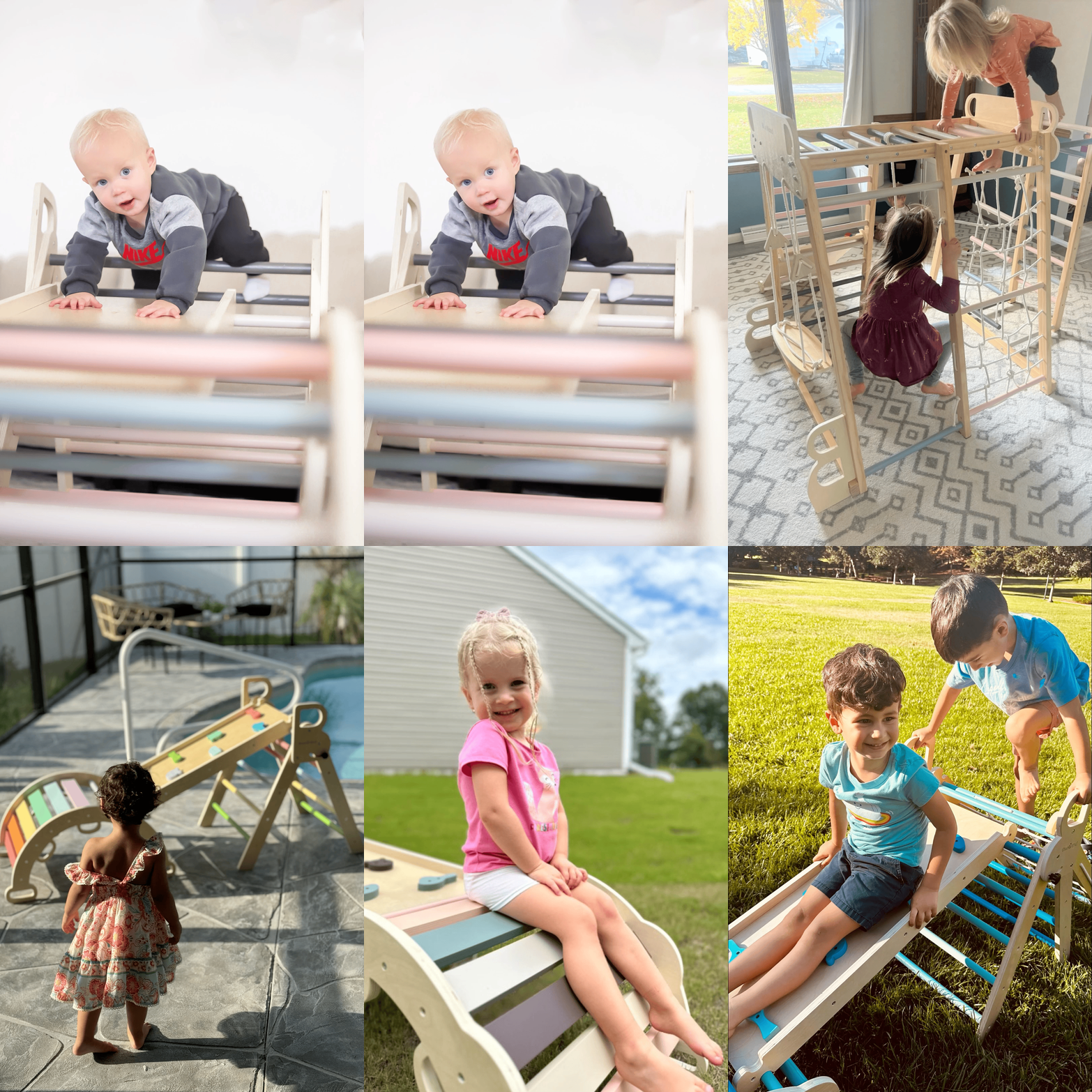
In this process, Montessori materials act as silent partners, offering gentle and effective support. For example, toys designed by BlueWood, with their natural materials, open-ended play, and appropriately challenging designs, encourage children to develop focus, coordination, and problem-solving skills through independent exploration. Busy boards and other multi-sensory toys help children develop a sense of accomplishment, further boosting their confidence in maintaining attention.
So, why not start today by setting up a "screen-free exploration corner" at home? Put aside the urge to guide and instruct, and instead, accompany your child on this journey to rediscover their natural focus, patiently observing, and lovingly supporting them as their attention blossoms beautifully.
Leave a comment