
January 08, 2026
Understanding Montessori’s “Freedom Within Order” Through One Toy: The Philosophy Behind the Pikler Triangle

In Montessori education, children are seen as natural explorers, driven by curiosity and an innate desire to learn. True freedom, however, is not the absence of boundaries—it grows best in a clear, safe environment. This is the essence of Montessori’s principle of “Freedom Within Order.”
Grasping this concept can help parents and educators create spaces that are both open and stable for a child’s growth. In everyday life, suitable toys and tools—like the Pikler Triangle, which combines exploration with organized storage—allow children to play freely while subtly internalizing a sense of order, making learning an enjoyable and self-directed experience.
1. Freedom: Sparking a Child’s Inner Drive to Grow
In Montessori education, “Freedom” refers to giving children the opportunity to make choices, explore, and experiment within a structured framework. This type of freedom fosters growth in several key ways:
-
Developing independence: Children learn to take responsibility for their choices, gradually building time awareness and self-management skills.
-
Stimulating creativity and problem-solving: Without predefined answers, children explore multiple approaches, nurturing imagination and logical thinking.
-
Enhancing intrinsic motivation: Learning driven by interest keeps children focused and engaged, forming a positive attitude toward learning.
In a Montessori classroom, children can freely choose activities across areas such as language, math, and practical life, discovering themselves and the world through hands-on experiences.
2. Order: Providing Safety and Structure for Freedom
Freedom without boundaries can easily lead to chaos or anxiety. In Montessori education, “Order” does not mean restriction—it provides a predictable, reliable environment that supports exploration. Order manifests in three main ways:
-
Environmental order: Materials are neatly arranged and clearly categorized, each item has a designated place.
-
Activity order: Clear rules for using materials and interacting with others help children understand “how to do things” and “how to coexist.”
-
Psychological order: A stable environment fosters a sense of security, giving children the confidence to focus and take risks.
Order is not a constraint; it is the protector of freedom, allowing exploration to be deeper and more confident. As Montessori said, “Order is the protector of freedom.”
3. Balancing Freedom and Order: Nurturing Autonomy Within Structure
“Freedom within order” is not an either-or choice—it’s about letting the two complement each other. Children can choose activities freely while learning to follow basic rules, such as:
-
Returning materials to their proper place after use.
-
Respecting others’ space and not disturbing peers.
-
Handling materials gently and responsibly.
Finding this balance helps children turn external rules into internal habits. In the process, they develop self-discipline and a sense of responsibility. This principle comes to life both in classrooms with clearly defined activity areas and at home with designated toy storage and daily routines.
4. How Freedom Within Order Shapes a Child
When freedom and order coexist harmoniously, children gain a solid foundation for comprehensive growth:
-
Enhanced focus: An orderly environment reduces distractions and helps children engage deeply.
-
Internal discipline and responsibility: Making choices within rules teaches children to manage their actions and accept consequences.
-
Sustained creativity and confidence: Freedom encourages innovation, while structure provides the security to take risks.
5. The Pikler Triangle: Practicing Freedom and Order Through Physical Exploration
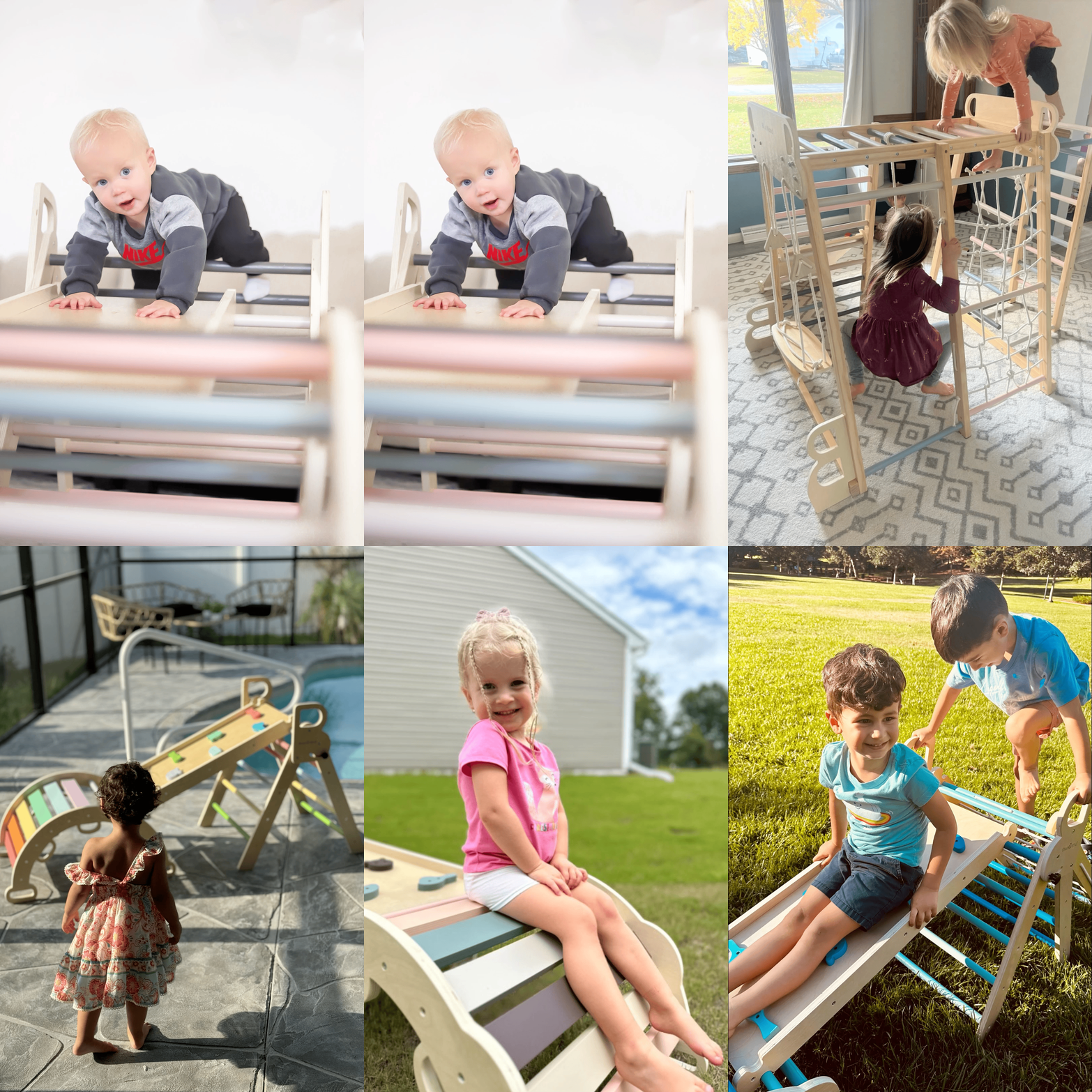
Physical development is a core aspect of Montessori education, and the Pikler Triangle is an ideal tool for supporting both autonomous movement and a sense of order. Children can climb and balance at their own pace, developing coordination and spatial awareness, while learning responsibility and structure through setup and storage.

For example, BlueWood’s foldable Pikler Triangle encourages freedom while integrating thoughtful design for order:
-
Easy to store, keeping space organized: Folds away when not in use, maintaining a clean and functional area.
-
Maintains novelty of exploration: Rotating use and proper storage prevent visual fatigue and clutter.
-
Supports habits of order: Children help unfold and fold the triangle, learning to care for their environment and put things away.
-
Extends the toy’s lifespan: Proper storage reduces wear, allowing the toy to be used longer.
It’s more than just a climbing toy—it embodies Montessori principles, letting children explore safely within a structured framework while experiencing rules, responsibility, and organization.
6. Bringing “Freedom Within Order” into Daily Life
“Freedom Within Order” is not just an educational philosophy—it’s a lifestyle that can be integrated into everyday routines. Parents can support children in simple ways:
-
Designate clear storage spots to help children establish spatial order.
-
Create simple, consistent daily routines that children can anticipate and participate in.
-
Allow children to make choices within safe limits and take responsibility for their decisions.
Choosing the right tools makes this process natural. Toys like the BlueWood Pikler Triangle, which combine open-ended exploration with structured design, give children the opportunity to move freely while learning to respect their environment and manage themselves.
We believe the best way to support a child’s growth is to provide a space with both boundaries and wings. In the balance of freedom and order, children can explore joyfully while growing into independent, focused, and responsible individuals.
Laissez un commentaire